
GHS Pipe Labeling Guide
What the Globally Harmonized System is, how it applies to pipe marking under ASME (ANSI) A13.1, and what each of the nine GHS pictograms means.
Globally Harmonized System of Classification and Labeling of Chemicals
Chemicals, through the different steps from their production to their handling, transport and use, are a real danger for human health and the environment. Employees and workers, using many different languages and alphabets, are confronted daily with these dangerous chemicals.
To face this danger, and given the reality of the extensive global trade in chemicals and the need to develop national programs to ensure their safe use, transport and disposal, it was recognized that an internationally harmonized approach to classification and labeling would provide the foundation for such programs. Once countries have consistent and appropriate information on the chemicals they import or produce in their own countries, the infrastructure to control chemical exposures and protect people and the environment can be established in a comprehensive manner.
The new system, called the “Globally Harmonized System of Classification and Labeling of Chemicals (GHS)”, addresses classification of chemicals by types of hazards and proposes harmonized hazard communication elements, including labels and pipe markers. On the 28th of November 2008 the European Council adopted the GHS regulation. The publication followed on the 31st of December 2008, meaning that GHS can be applied from the 21st of January 2009.
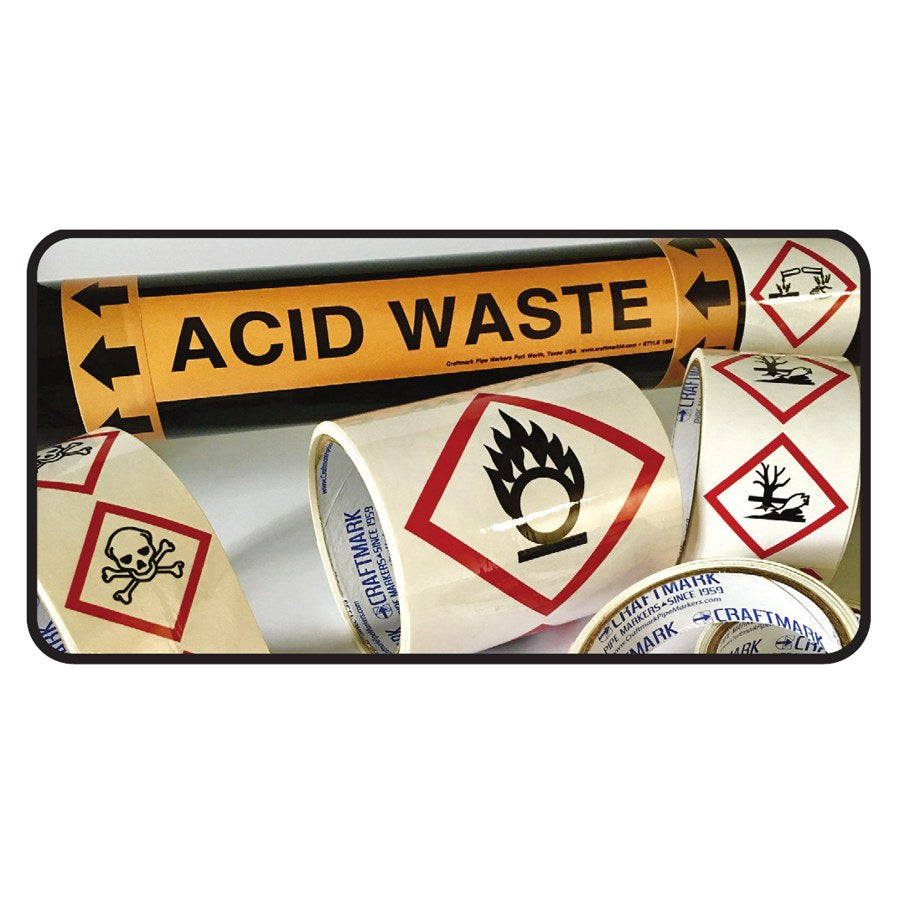
GHS on piping
The pipe marking standard allows GHS pictograms on pipe markers.
Craftmark has a full line of GHS pipe markers, pictogram roll tapes and individual labels for use on piping.
The nine GHS pictograms
Each pictogram covers a set of hazard classes and categories.
| Pictogram | Description | Hazard class and hazard category |
|---|---|---|
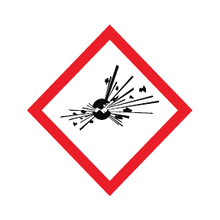 | Exploding BombGHS 1 |
|
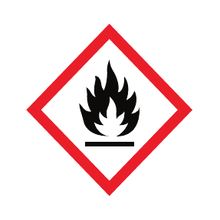 | FlameGHS 2 |
|
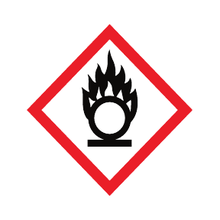 | Flame Over CircleGHS 3 |
|
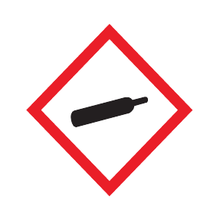 | Gas CylinderGHS 4 |
|
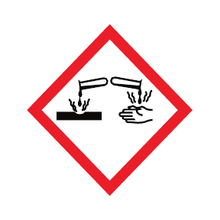 | CorrosionGHS 5 |
|
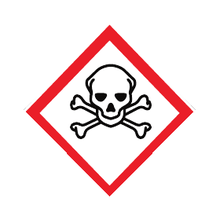 | Skull & CrossbonesGHS 6 |
|
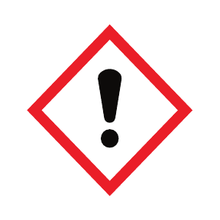 | Exclamation MarkGHS 7 |
|
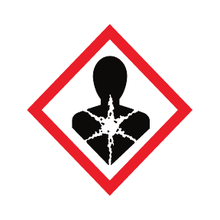 | Health HazardGHS 8 |
|
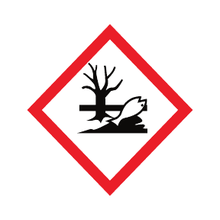 | EnvironmentGHS 9 |
|
Shop GHS pipe labeling
This page is a summary for reference. Consult the Safety Data Sheet for each chemical and the current GHS and ASME (ANSI) A13.1 documents for the complete requirements.
Need a legend that isn't stocked?
Send us your chemical list and we'll quote custom GHS pipe markers.